KABK Class of 2026 alumni present OYO-10 at the Haagse Kunstkring
Fourteen alumni from the Royal Academy of Art, The Hague (KABK), come together for the tenth edition of OYO (On Your Own), an annual exhibition organized by the Haagse Kunstkring, which invites recent graduates to showcase their work collectively. Over the past decade, OYO has built a growing history, connecting emerging artists from the academy with the public and the broader art scene in The Hague.
Our individual practices have evolved across different departments, backgrounds, and disciplines. As a collective, we find ourselves on the cusp between student life and the professional world. OYO is a celebration of all the effort and time that have brought us here. The works are both dynamic and static, wet and dry, structured and disordered; they cover entire walls and invite you to contemplate absence. Gathered under one roof, they offer a temporary glimpse into the many ways artistic work can take shape, while we organize the exhibition and raise a glass to the occasion together.
Opening Thursday, October 22, from 6:00 p.m. to 10:00 p.m.
We look forward to welcoming you.
Exhibition Dates: October 21, 2026 – October 31, 2026

Participants:
Tom Allsop, Eva Coviello, Roland Farkaš, Yicheng Geng, Beerend Honing, Roni(a)Johansson, Ilja Kolosovs, Simcha Ziya Moïse, Luca Oosterloo, Lino Podesta, Aga Rymuszka, Soft Rebellion, Arthur Wagenaar, Esmée Witsel
ARTIST STATEMENTS:
Eva Coviello
Eva is a spatial designer and storyteller from Italy. Her work is driven by a curiosity about how domestic and sacred environments shape identity—both personal and collective—and the ways these spaces hold our stories. She gathers these narratives, interprets them, and translates them into spatial form.
The installation *Sacred in Motion, Wax Keeps It Still* ( Bitonto, Puglia, Italy) explores the tension between Catholic ritual traditions in Bitonto and the changing relationship between younger generations and sacred space. Through wax-hardened fabric figures frozen in gestures from the Santi Medici procession, the installation preserves the movement of the ritual while questioning the spatial structures that continue to shape it.
Roland Farkas
My practice explores inherited memory, survival knowledge, and identity through sculpture, weaving, and performance. Drawing from Roma craft traditions and intergenerational stories, I work with willow, copper, found objects, and textiles to transform materials of survival into forms that carry memory, connection, and resilience. I see making as a way of holding, reshaping, and passing on histories through the hands.
Simcha Ziya Moïse
Simcha (b. 2001, Netherlands) is a 25-year-old artist and designer, born in Utrecht and based in The Hague. Her practice explores image-making through structure, repetition, and visual experimentation. Working across print, objects, and image-making, she investigates how frameworks and limitations shape creative decisions and open up new possibilities.
Esmée Witsel
I am an interdisciplinary artist and writer; I explore what happens when stories outgrow the page they are written on. Through animatronics, sculpture, and installations, I create worlds where the nuances and properties of materials can take over the narrative of a story. My practice revolves around the role of imagination and its role in making sense of the world; when stolen boredom weighs heavily on the imagination, I encourage people to look up with wonder.
Luca Oosterloo
whoislvca (b. 1999, Italy) reflects on the tension between biological memory, which is prone to forgetting, and computational memory, which is not. Through the use of images, software, generative text, and sound, he blurs the boundaries between humans and digital systems, exploring what is lost when the ability to forget is replaced by the inability of those systems to do so.
Ilja Kolosovs
Ilja Kolosovs is an artist whose practice explores the relationships between digital culture, data, and society. Through artistic research, he repurposes existing technologies and platforms to examine the infrastructures that shape everyday experience. By redirecting these systems away from their intended use, his work reveals the narratives hidden within them.
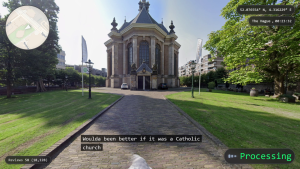
Digital mapping is a recurring theme in his practice. He examines how mapping platforms shape our understanding of place and what political and cultural assumptions are embedded within them. His work explores the gaps between physical environments and their data-driven representations, tracing how these platforms influence the ways we experience place.
Beerend Honey
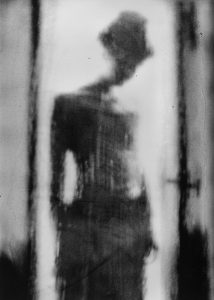
I am Beerend Honing, a 23-year-old artist working in the medium of photography, currently based in Amsterdam. I am interested in the relationship between time, memory, and photography, and in the ways they shape and transform one another. Through my introspective, darkroom practice—in which I manipulate my images through a cyclical process of printing and reprinting—I explore the instability of time and memory. With my work, I aim to create space for feeling and absorption, in the belief that art, in its moments of absorption, can free one from the weight of time and serve as a source of beauty and solace.
Roni(a)Johansson
roni(a) johansson (b. 1996 in Älvdalen, Sweden) creates “climates”: spatial environments of installation and performance where organic sculptural forms interact with altered domestic and industrial objects. Working primarily with latex, metal, fabric, rust, and water, their process-driven practice is informed by queer and neurodivergent perspectives and grounded in repetition and (maintenance) labor. The work brings bodies, materials, and environments into mutual dependence, allowing friction between different systems and discomfort to become part of a continuous relationship.
Lino Podesta
Lino is a person who doesn’t like to use “.” and “,” he likes to work with nothing; he likes to work with everything; he likes to start where it ends and end where it starts. On paper, he’s described as an architect—a sort of guy who draws life from above and speculates on creation through calculus and math, behaving like a spy inside the big box—a sort of guy who got a chance to catch a glimpse of something dirty about space and architecture and created something that stands as its antithesis—an architect who works without architecture
Yicheng Geng
Yicheng is an artist whose practice explores states of in-betweenness. Her current work focuses on cultural identity, shaped by her experience living between China and the Netherlands. Working across textiles, ceramics, glass, and historical imagery, she examines how images and narratives shift as they travel across cultures and time. She approaches misunderstanding and mistranslation not as errors, but as generative processes, using fragmentation and reconstruction to create new relationships between familiar forms. Her work blurs the boundaries between cultures, histories, and material languages, allowing different perspectives to coexist without resolving their contradictions.
Arthur Wagenaar
In a digital age where self-doubt and a sense of meaninglessness are fueled by the endless display of perfection, today’s youth must counter this by reiterating their own ideas: the foundation of learning. Look to your own roots to cultivate your own ideas. My practice resembles the repetitive and dedicated labor of monastic life, highlighting the importance of process and creativity—not as sudden inspiration, but as an ongoing commitment.
soft rebellion
Founded by Emma Lobina and Noah Warmer, based between The Hague and Brussels, Soft Rebellion is a collective of world builders, shapeshifters, and collectors of dreams. With textiles as our anchor, we build bridges between fantasy and reality—working with and around spaces and places (splaces) to create worlds where people can see themselves reflected, and where our systems of oppression, disconnection, and habits of othering are held up to critical scrutiny. Ultimately, we aim to create soft splaces of coexistence and rebellion.
Aga Rymuszka
My practice is rooted in theater, the grotesque, carnival, and puppetry. In my work, I seek out the intersection of life and art and amplify it tenfold, drawing on carnival traditions of excess, play, and absurdity. I am interested in exploring the “popular culture of laughter” that historically allowed people to subvert the existing status quo. I am not interested in what is beautiful, nor am I looking for the truth or grand ideals. I want to reveal the ambivalence, the in-between, what is strange, eerie, and out of place—the fever dream.
Tom Allsop
Reproduction becomes an aesthetic condition. I focus on the quiet failures that occur through repetition, when an image is pushed toward uniformity but never fully arrives. Tools for repeated accuracy regulate movement and discipline the hand, asking it to perform a mechanical gesture through repetition and restraint. As the hand adapts, it begins to mimic the machine. Gesture becomes learned, rehearsed, and efficient. Yet this conformity is unstable. Fatigue, impatience, and restlessness accumulate, allowing subtle variations to surface. These deviations are not interruptions but evidence: the human emerging from a framework designed to contain it, where precision becomes a continuous negotiation.